
Bio-Pure® package wastewater treatment
Treat wastewater where you build.
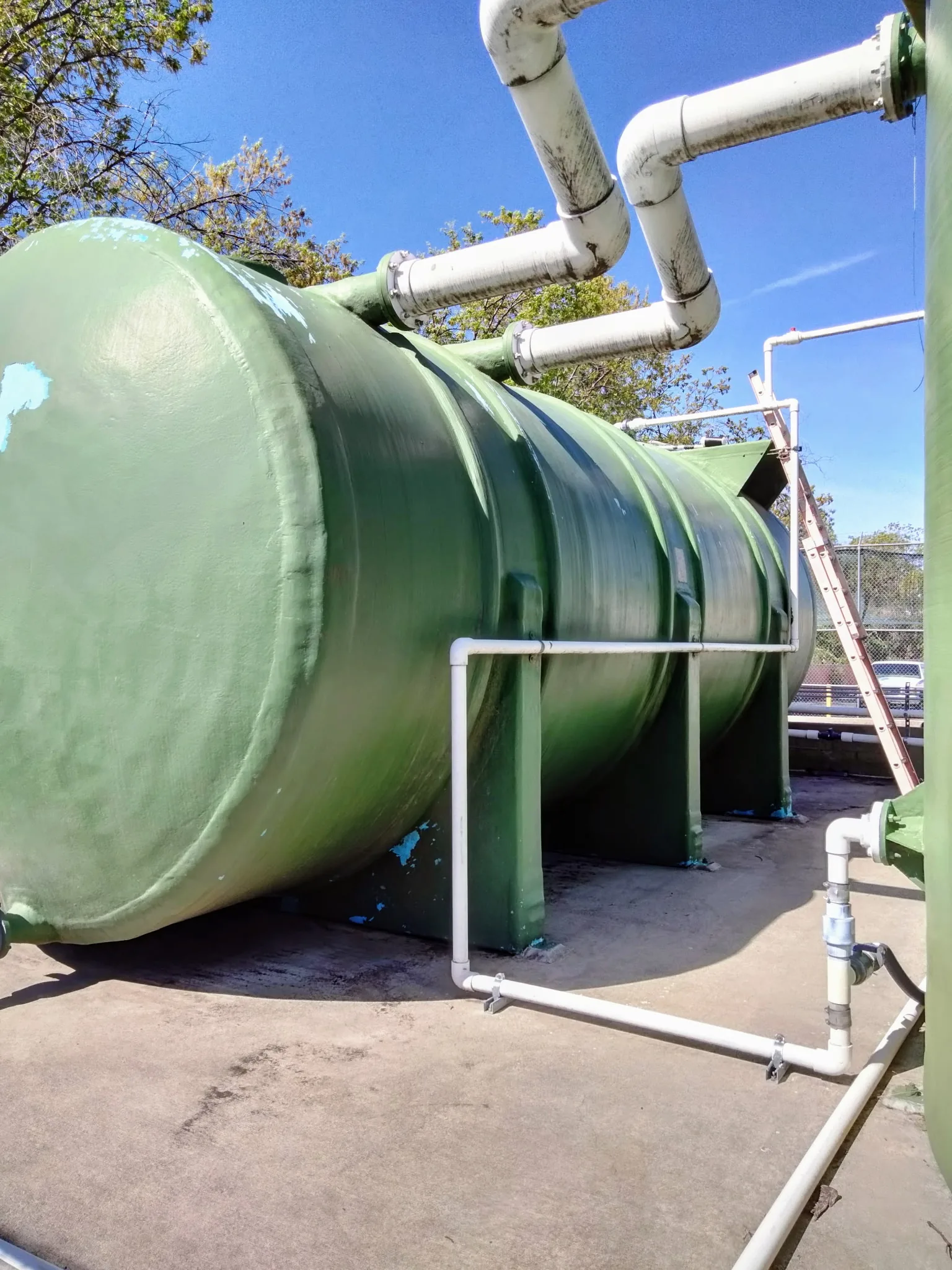
We manufacture and sell engineered package wastewater treatment systems from 2,000 to 50,000+ gallons per day, and design up to 250,000. They are a cost-effective alternative to centralized municipal treatment wherever a sewer main is out of reach.
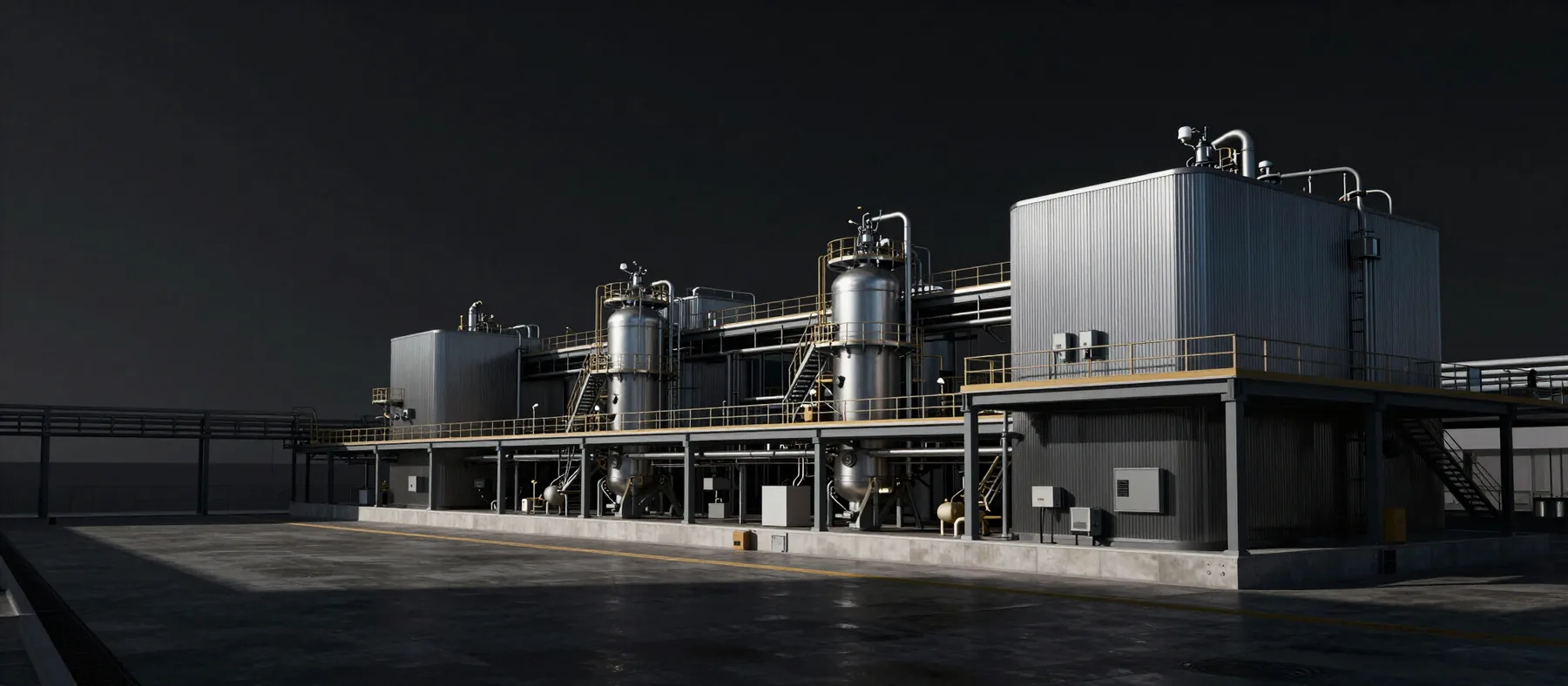
Proven. Patented. Powerful.
High volume. Small footprint.
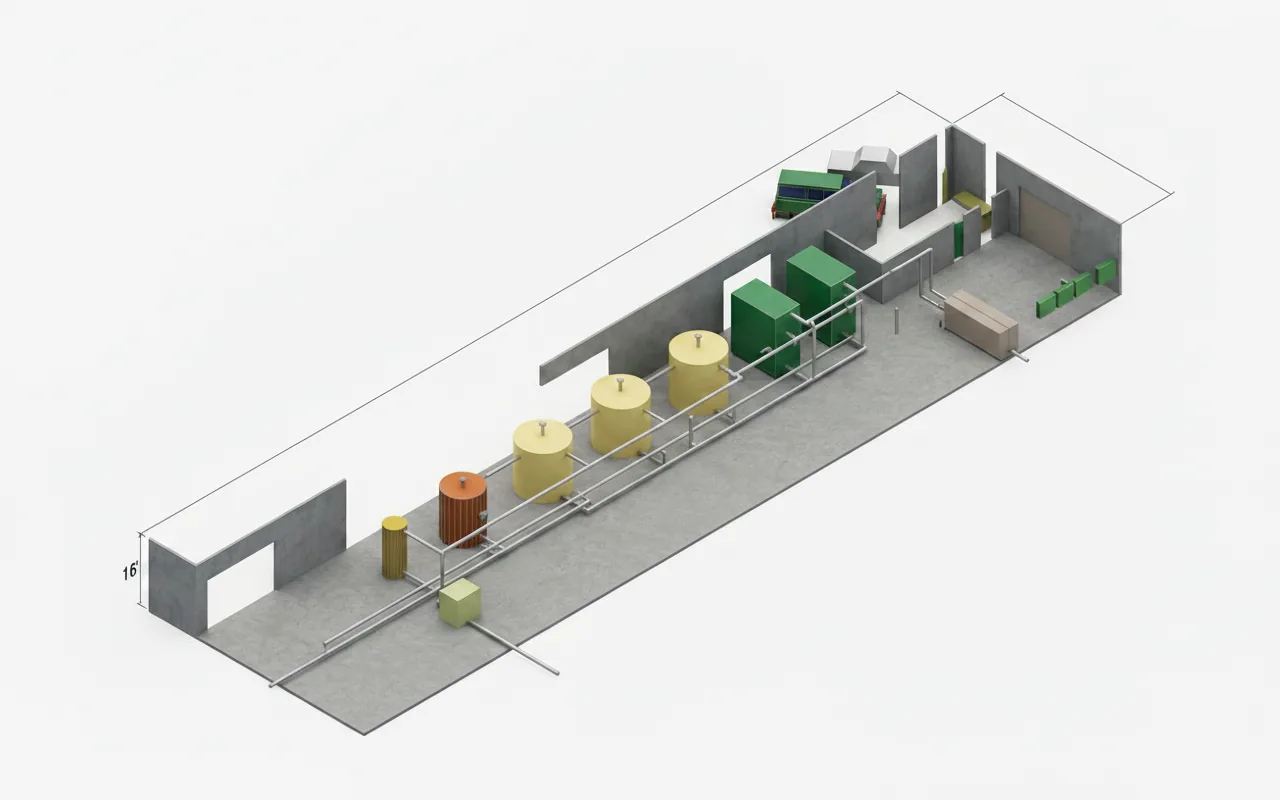
A conventional plant treating 50,000 gallons a day takes 3 to 5 acres (130,680 to 217,900 sq ft). A Bio-Pure system treats the same flow on about 5,000 square feet. That slashes land cost and leaves the most acreage for commercial development.
- Install
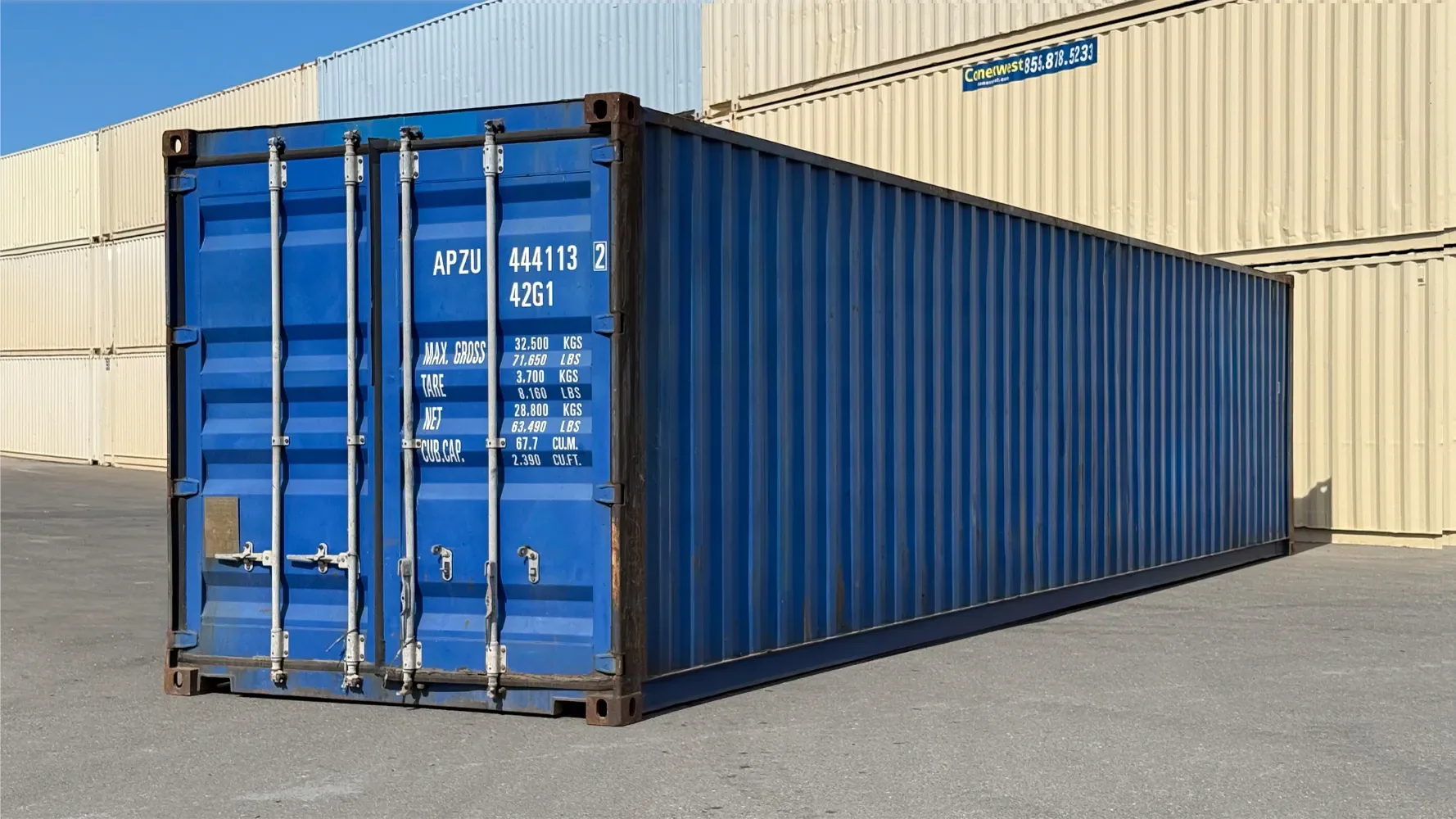
- In a container, skid-mounted or mobile. Permanently indoors or outdoors, above or below ground.
- Deploy
- Above ground, fully enclosed and modular, with no complex municipal hookup.
- Standards
- Built to meet stringent environmental standards, including California Title 22.
- Scale
- Micro-grids of modular units add capacity with built-in redundancy.
Traditional system: 3 to 5 acres
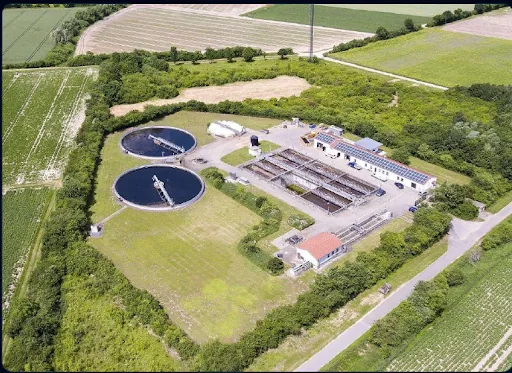
Bio-Pure® system: 5,000 sq ft footprint
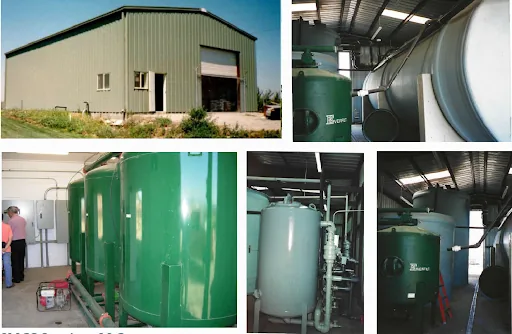
Above ground, fully enclosed
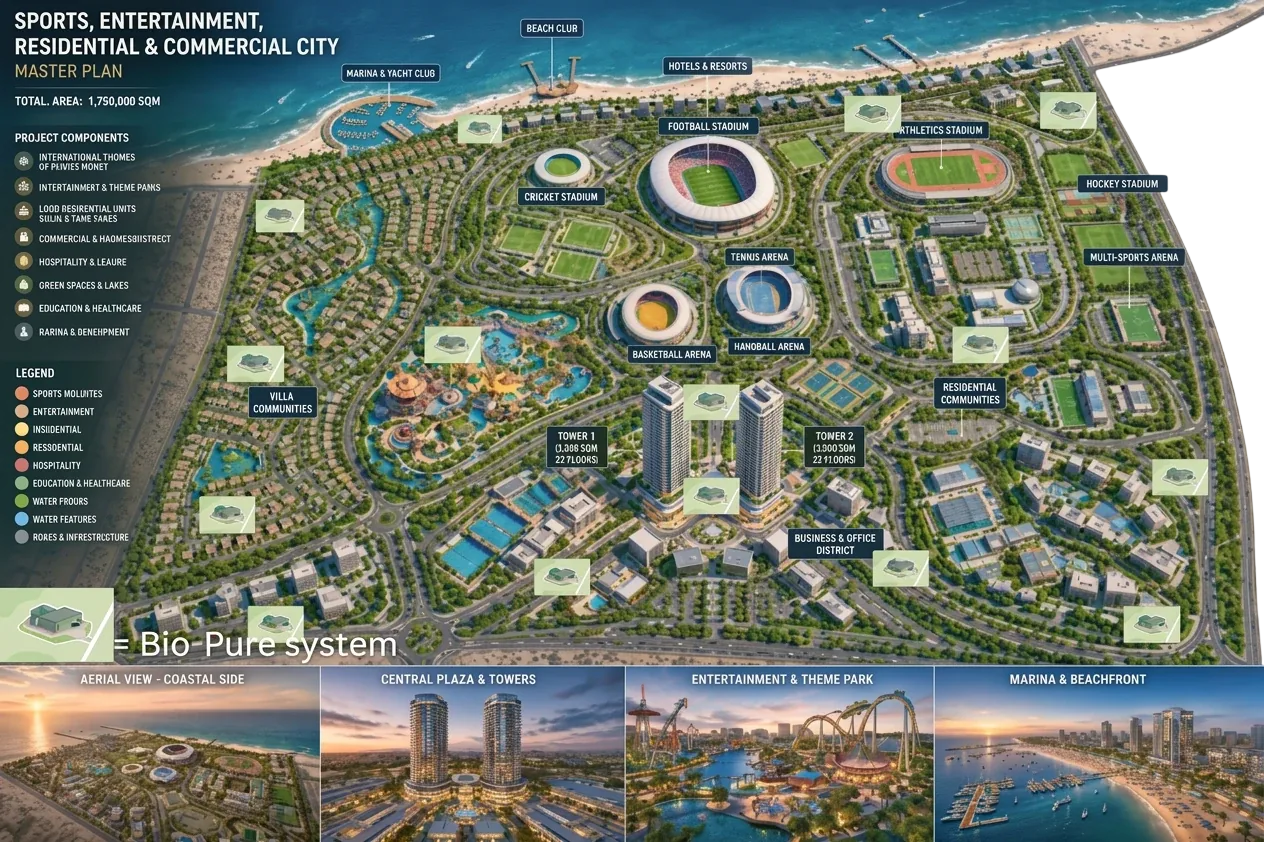
Maximize value · Coastal Saver
Full treatment on high-value waterfront.
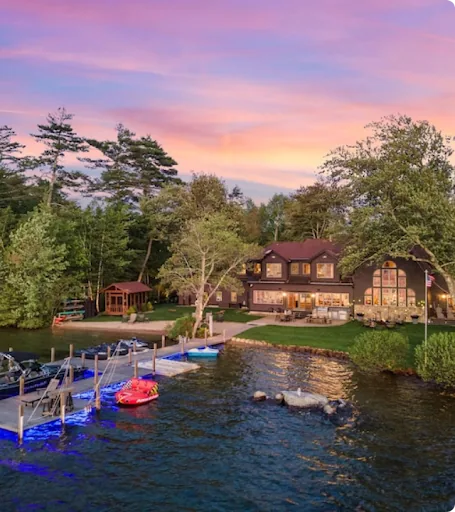
Waterfront property, some of the most valuable land in the world, often stays undeveloped because there is no sewer. Our compact modular systems handle sewage on expensive shoreline sites in a way that is both cost-effective and environmentally protective, and keep premium land available for development.
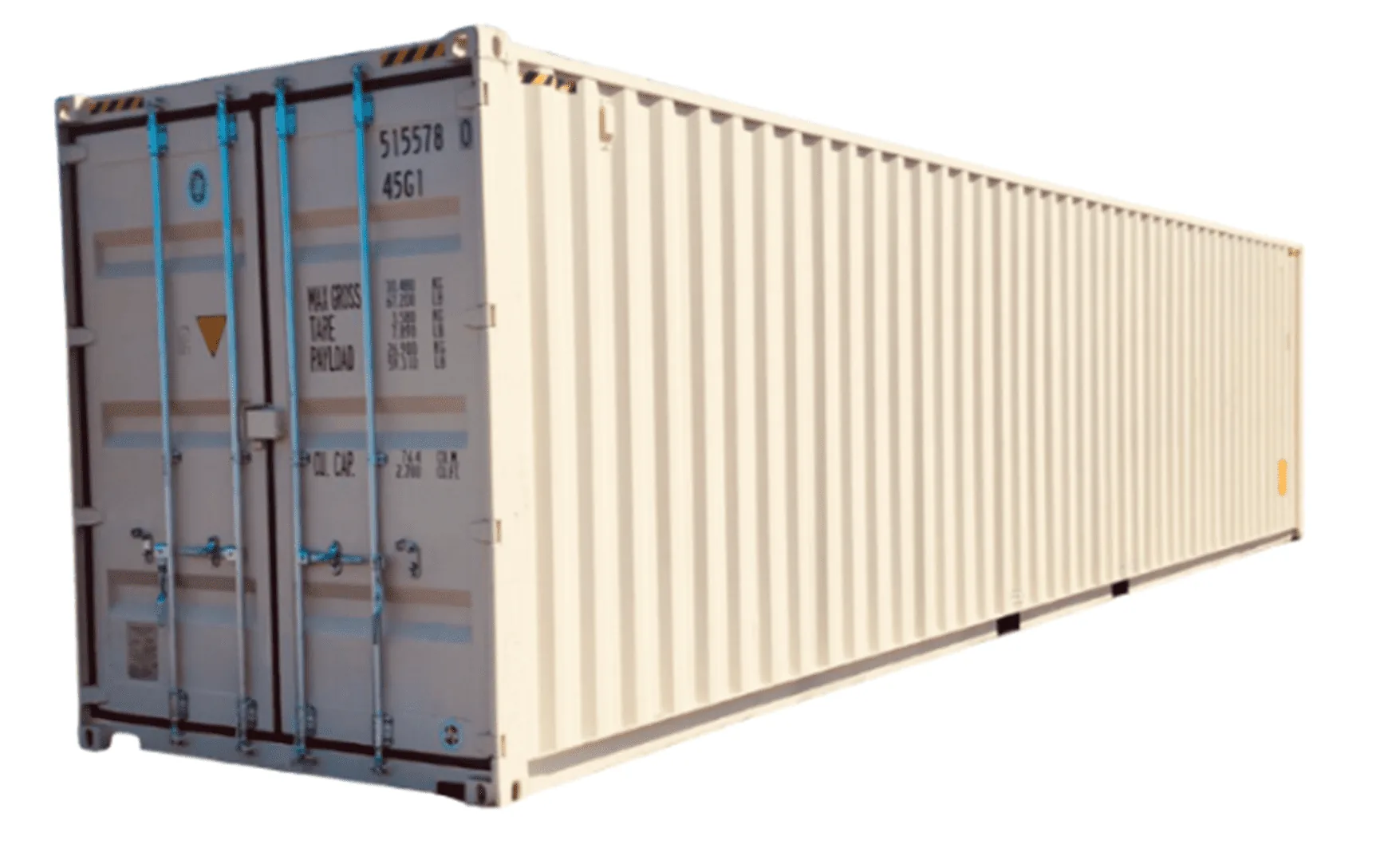
For example, a 5,000 GPD system in a 10' × 40' container can treat the wastewater from a 100-unit hotel or a 20-unit residential development. Its reclaimed water can then serve landscape irrigation, water features and other non-potable uses.
Small footprint · reduced energy costs
An activated-sludge batch process, built into a box.
Because Bio-Pure systems use an activated-sludge batching process, they can be engineered for maximum operating efficiency. Installation cost (CAPEX), footprint and operating and maintenance cost (OPEX) all come in well below the flow-through systems used in most municipal plants. The systems also reclaim higher-quality water, cut infrastructure cost by decentralizing treatment, scale to a wide range of capacities, and fit a private-utility business model better than flow-through plants.
Advanced biological treatment
High-performance process trains that remove BOD, TSS and nutrients to meet strict municipal and industrial discharge limits. Ideal for new plants and upgrades where reliability is critical.
Compact modular units
Factory-built, skid-mounted and tank-based systems for tight sites and phased growth. Less civil work, faster installation and simpler expansion.

Smart monitoring and control
Integrated controls, remote monitoring and data logging give operators real-time visibility into flow, loading and performance, with fewer site visits.
Reclaimed water
Treated water for landscape and agricultural irrigation, water features, surface-water volume and firefighting reserves.
Technical specifications
Three standard sizes. Custom designs beyond.
Every system is engineered for its site. Designs range from 500 to 500,000 gallons per day; these are the standard starting points.
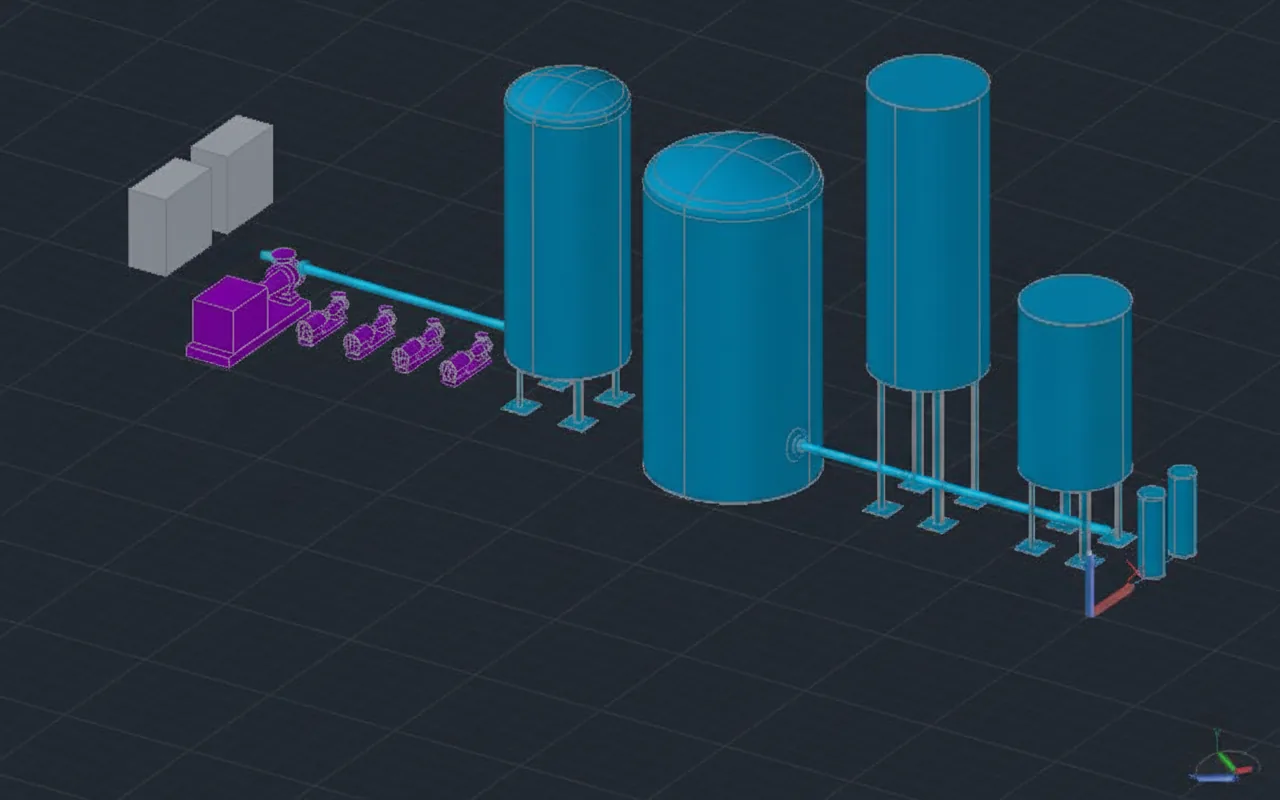
- Factory-manufactured; delivered skid-mounted or in a Conex-type container, or assembled on site
- A 10' × 40' container can serve a 100-unit hotel or a 20-unit residential development
- High-efficiency modular configuration
- About 5,000 sq ft, versus 3 to 5 acres for a conventional plant
- Designed to reduce lifecycle cost
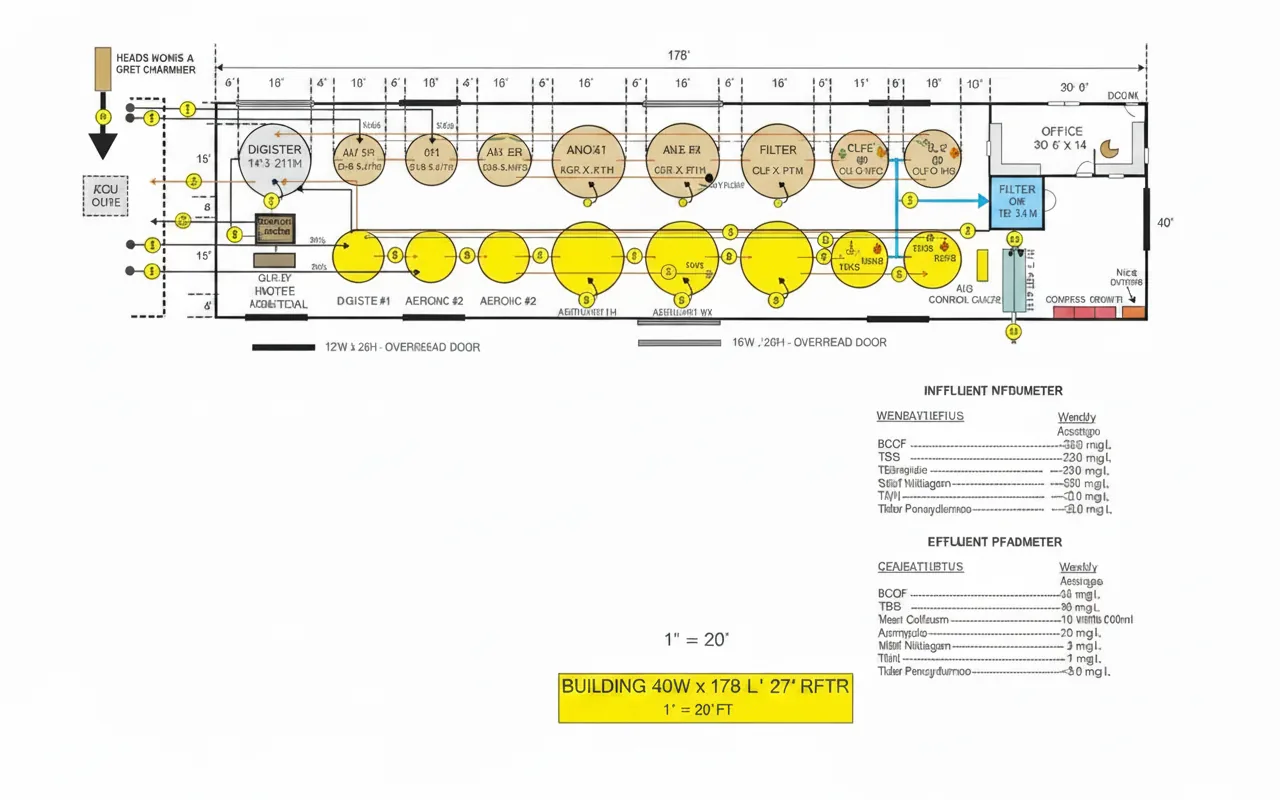
- Premier architecture with strong spatial efficiency
- Scalable for long-term operating savings
Systems are available to purchase or through a Private Utility District (PUD) model, with customizable designs, low maintenance and operating costs, remote monitoring and a record of regulatory acceptance.
Capturing massive global demand
Built for the places sewer can't reach.
Typical projects include master-planned communities, multifamily developments, workforce camps, disaster recovery sites and waterfront developments.
No sewer available
Rural residential developments, RV parks and subdivisions, off-grid resorts and campgrounds where a municipal plant or sewer connection isn't feasible.
Septic prohibited
Non-percolating soils such as lava rock (as in Hawaii) and heavy clay, and sites near shorelines.
Temporary sanitation
Worker and man camps, temporary industrial sites, military camps, refugee camps and emergency housing.
Marine protection
Offshore oil platforms, passenger and cruise ships, and military vessels.
Reclaimed water
Landscape and agricultural irrigation, keeping surface water bodies at volume, and firefighting.
Waterfront: Coastal Saver
Compact systems for high-value shoreline property where sewer access is lacking.
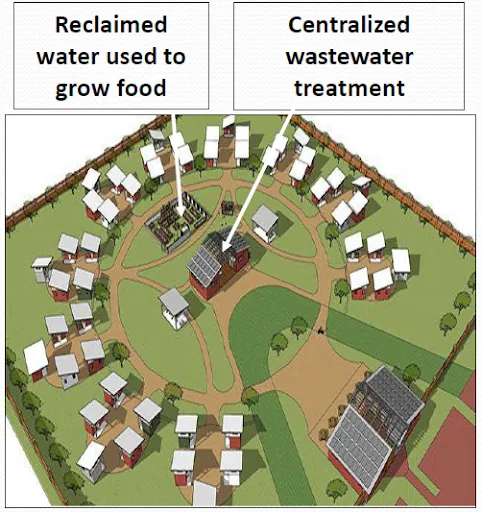
Unlocking prime real estate
The most valuable land is often the hardest to build on.
Lakefront and coastal land carries the highest premiums, yet septic rules and environmental setbacks can leave it undevelopable. Bio-Pure removes the need for a septic drain field, which can turn restricted waterfront into resorts and higher-density communities.
At JMCS Services we believe the less infrastructure, the better.
Who we are
JMCS Services LLC
A Washington limited liability company headquartered in Buckley, Washington. Since September 2020 we have been the sole global supplier of the patented, NSF-certified Bio-Pure® Package Wastewater Treatment System, an extended-aeration batch process with a 45+ year track record.
Our objective is to market, sell and install Bio-Pure systems worldwide to provide basic sanitation, in developed and developing countries alike. We focus on advanced engineering, decentralized systems, process optimization and regulatory compliance.
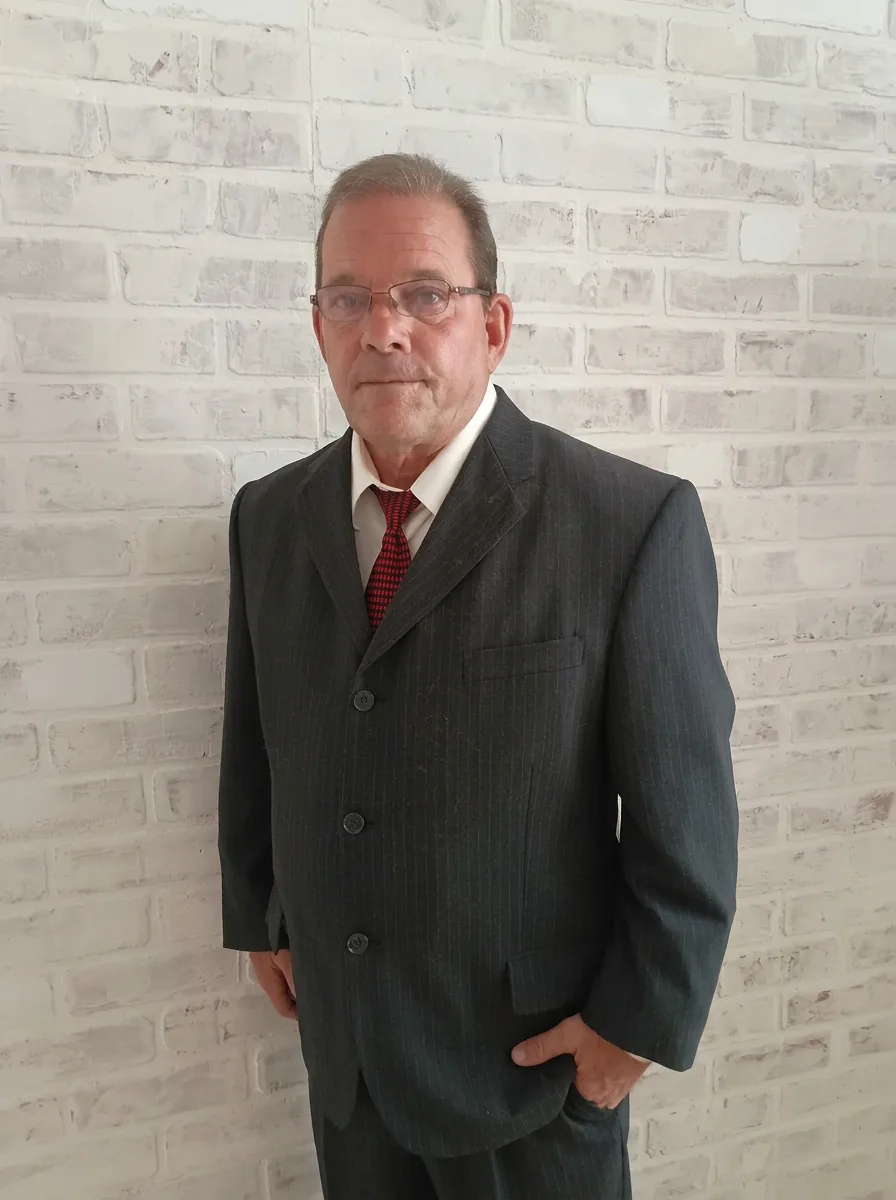
Pat McCleary
Founder · President · Managing Member
A Marine with more than 25 years in real estate and land development, executive management, retail management, project finance, property acquisition and creating private utilities.

Gordon Banks
Founder · Vice President · Managing Member
Former NFL player and oil and gas businessman who now leads a nonprofit ministry near Seattle with his wife.
Lee Shull, Ph.D.
Founder · Chief Technology Officer
Environmental scientist with 35+ years of executive experience at global corporations, after 14+ years as a tenured professor in toxicology, health risk assessment and environmental remediation.
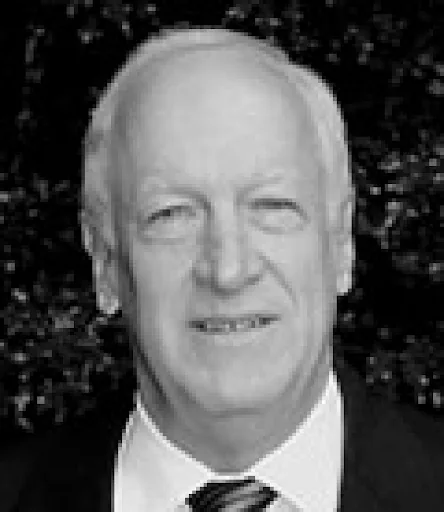
Ben Roberts, Ph.D., P.E.
Chief Engineer
More than 40 years in hydrology, hydraulics, fluid mechanics and process design across water, wastewater, biotech and semiconductors. Has taught at Stanford and MIT and served as CTO at large corporations.
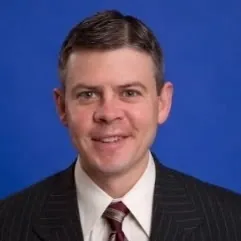
Casey Colton
Development
More than 25 years in residential and commercial development, horizontal and vertical. Helps owners secure entitlements, navigate regulatory compliance and negotiate contracts.
Connect with our experts
Ready to optimize your wastewater footprint?
Our technical team will discuss your facility's requirements and recommend a customized solution that keeps operating cost low.